
So Long, Stephen
Unexpected loss, church drama, and reflections from the stage: In loving memory of Stephen Nye the Music Guy

Two weeks ago, the day after my grandfather’s funeral, I went to church with my grandmother. Not for God, really — though I can’t speak for her (she’s always pretty in it for God, I think). But on August 24th, we went mostly to support our friend, Stephen.
Stephen Nye was a brilliant musician — a genius, probably, we often said in our household. He began as the Director of Music at my grandparents’ church in 2002 — a role that he always did as a volunteer, saying that it was his way of worship; he was expressing his gift back to the creator which gave it to him. He refused to ever be paid.
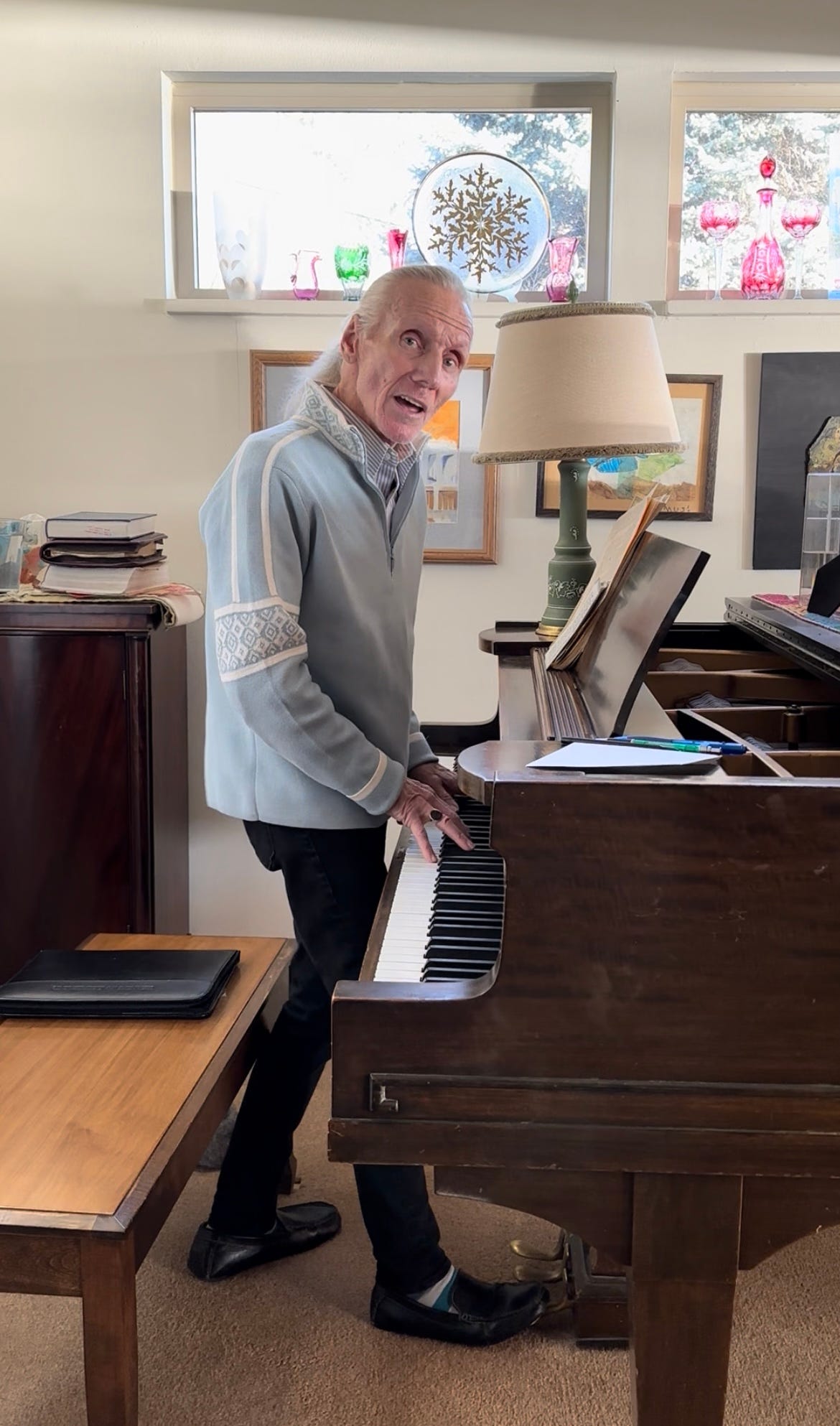
He’d sit up there at the front, on stage left, pounding away at his piano; he’d wave his hands stern in front of the Christmas Eve choir, which often was just a handful of elderly people, my grandparents included, holding their warbling harmonies. His eyebrows always knit in concentration, his small body gave itself over in wholeness to whatever he was playing and singing.
When I first met Stephen in 2009, I had no idea that my grandparents were friends with him; that they heard him play every Sunday, that they gathered in the church basement with him as their leader, banging out again the alto part. Apart from being a volunteer church musician, Stephen was a composer; a longtime educator; and music director for theater productions.
So it was that I first encountered Stephen in a black box inside of Denver’s Jewish Community Center, where I was auditioning for a production of Fiddler on the Roof.
He was there behind a table at the back of the space, sitting with his hands folded next to the director, when I walked in. I was nervous and trying to be sure of myself, with my burned CD piano track of Far from the Home I Love trembling in my hands. I put it in the boom box, stood in my bravest stance, and gave one of the only auditions I ever remember being genuinely happy with.
It is a rare thing, when you are a child, or a teenager, and an adult can see you. But I sensed in Stephen that he could. After I was cast as Hodel in the show, he told me, during one of our many one on one rehearsals, that it was a very bad idea to sing a song from the musical you’re auditioning for — to try to embody the role that you want — unless you do it perfectly, which is what I’d somehow done. So we just had to give it to you, I remember him saying, with a little sideways smirk, before he turned back to the piano and started playing again. I stood up a little bit straighter, then. I felt like I might be allowed to take up some space.
This was enormous for me, as I’d only tried out for the show because I’d been cast at another children’s theater company, one too many times, as a fox or a donkey or (and I wish I was kidding here) the pumpkin in Cinderella. Always a gourd, never a princess. I knew I wasn’t bad at singing or acting or even dancing; I actually thought I was pretty good, and I worked hard, and I wish I’d just be given one chance. Stephen was one of the first people to really give me one. At 13, this seemed to shift everything.
As the music director of the shows at the J, he was not everyone’s cup of tea. He wasn’t the warmest person — he had a job to do, and he was going to do it well. He didn’t have patience for silliness, or pitchiness, or teenage drama; missing your cue was a cardinal sin — if you were lollygagging around and not paying attention, and you didn’t come in with certainty and verve on your correct note, the look he’d shoot your way might kill you. He was maybe five feet tall and, in those days, always had a spray tan so deep he was leather-adjacent. Perfectly coiffed, he stood before us at the dress rehearsals — his thin ankles visible beneath his crisp slacks; his dainty feet tucked, un-socked, into a fine pair of Italian leather loafers — telling one of us 14-year-olds that, for the love of God, we have got to stop going sharp.
When it came to our performances, he played the entire score on a keyboard, somehow becoming about six instruments. One summer, we put on a production of Les Mis, which is non-stop music for about three hours, and he played it all. I could never quite roll my eyes at him like my peers did; I thought he was too talented, and interesting, and bizarre.
And anyway, he’d looked at me and seen me. And that is no small thing.
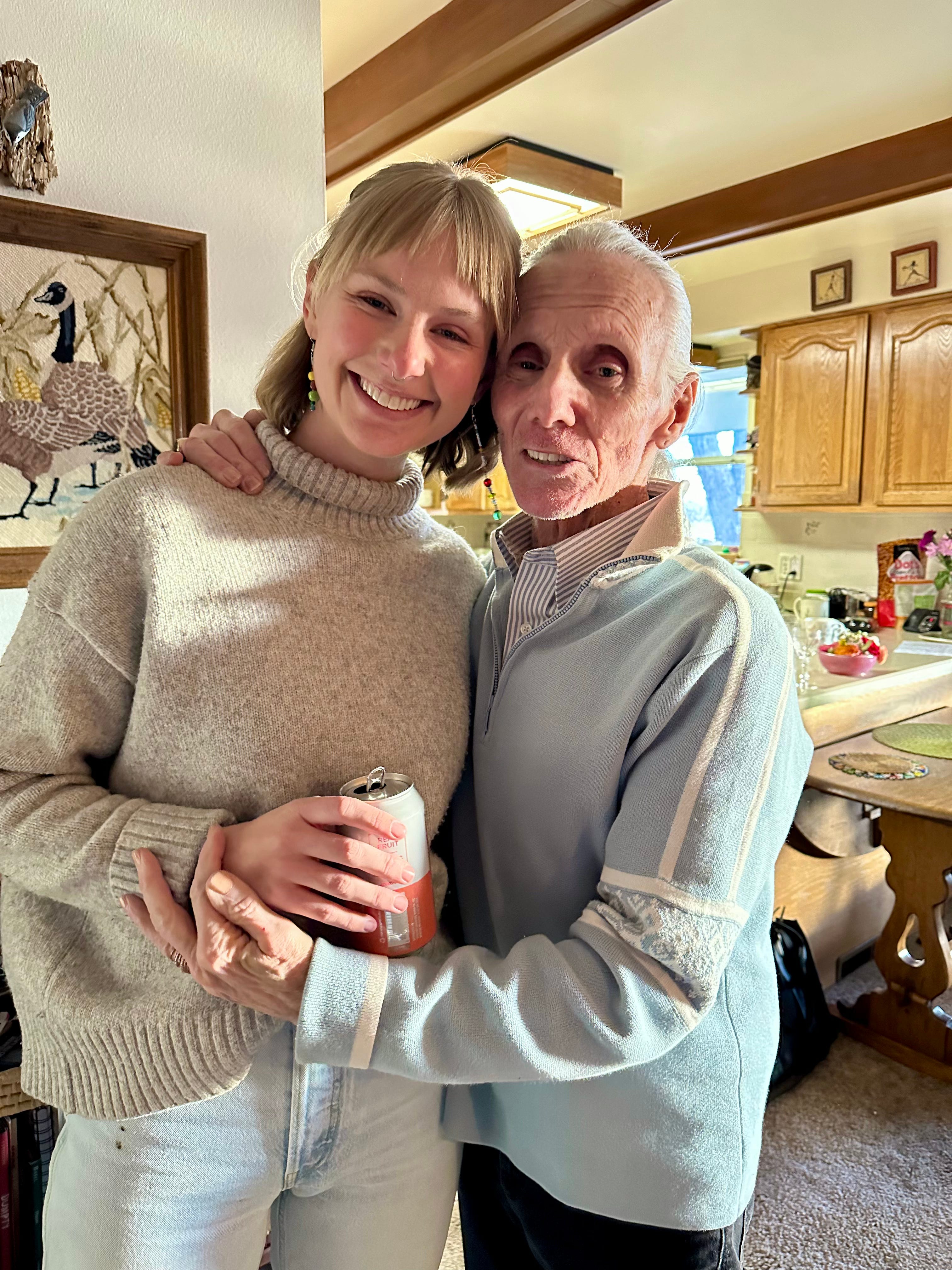
And so it was that, 16 years after I’d first met him, 25 years after my grandparents did, I came to be sitting in the front pew of this church with my grandmother and my aunt to support Stephen as he left his role as music director — perhaps the last role, at 76, that he still had. Recent talk by the vestry about his often lateness, his forgetfulness, his unpredictable illnesses might be categorized more as gossip, according to my grandmother, and there had been plans to ask Stephen to step down.
Knowing this was coming, Stephen left of his own accord, sending a church-wide email on August 3 in Comic Sans (unironically, I am sure, which is very him) stating that the love that had originally drawn him to the church had turned sour, leaving him with “frustration and resentment, rather than love and gratitude.” As such, he said, he’d be stepping down as the music director and would remove his personal effects from the premises before the end of the month.
The post-service “farewell party” the church threw for him on the 24th was unwanted by him, according to my grandmother, so we felt that it was important to go, to make him feel seen, as he had once done for me.
Over the past many years, Stephen’s not been very well. He would sometimes not show up, my grandparents said, to choir rehearsal: he’d get ready to go, get in his car, and immediately fall asleep in the driveway. There was always something going wrong for him — he once got confused when he was in an Uber, worried that it was going the wrong way, and ended up getting out of the car in the middle of nowhere, and no, of course he didn’t have access to his phone, and yes, of course he asked God if He might send a solution, and you know what, Stephen was picked up by someone who said they’d felt a pull from the big guy upstairs and he hitchhiked out safely. He was always sick with something, likely related to his being HIV positive. Not too long ago, he was mugged.
But when speaking of his woes, he always shrugged his shoulders. A man of deep faith, he believed wholeheartedly that whatever happened to him was part of God’s plan. That he’d walk his path without complaint. That he was learning in his own way the lessons he was meant to.
And anyways, Stephen always was a little strange, a little flakey, a little playing by his own rules. I don’t remember this much as a child — though I remember his utter peculiarness, children can sense this from a mile away — but as an adult, seeing him occasionally and mostly as my grandparents’ friend and a reminder of a musical dream abandoned, I saw his chaos. He wrote a song for my grandparents’ 65th wedding anniversary, performed it in front of my whole family to much delight, then insisted that he and I have a private rehearsal so he could hear me sing it with him. No matter how many times I tried to line up a schedule with him, something always fell through. He was sick. Or I couldn’t get ahold of him. Or he simply didn’t come.
The night before my grandfather’s funeral, which he was meant to play the music for, he called my grandma and said he was too sick to do it. I could see on her face how it broke her heart, but she told him to take care of himself, and hopefully he’d be better by Sunday for his going away party. When she hung up the phone, my grandma nodded slowly, lips pursed. He was a tough person to be counting on.
Still, she loved him. It was his idiosyncrasies that made him fabulous, and she knew it. On my grandparents’ 66th wedding anniversary, there was an unprompted knock on the front door of their house as they were going to bed at 10pm; they opened it up and there was Stephen, having just finished a song for them, and he simply had to play it on their anniversary. No other day would do. So, they let him in, and he sat at the piano and recited the lyrics of the song as a poem, then played the tune, then performed them together in tandem, so that the two of them could really get a good sense of everything going on.
That’s a singular kind of friend, who will do that. There was simply one Stephen Nye in this world.
When my mom texted me on September 3 that Stephen had died, I didn’t think it could be right: I had just seen him, and his salmon-colored sweater had so perfectly matched his suede salmon loafers; his gray slacks had been so perfectly pressed, his white hair combed back so carefully into a graceful ponytail that waterfalled down his neck that the idea of his gone-ness simply didn’t compute.
I’d only just been watching him play his perhaps jaded farewell to the church and the new priest who had been so rude to him; who hadn’t been able to see that what made him weird was also what made him wonderful, who couldn’t look past his absences to see that this little dinky church had been receiving the free services of a world-class musician for 23 years and who cares if sometimes he can’t make it. That place had been a home for him; a community; it was a tether, perhaps, to this world.
He played a song that day, in front of the meager church-going audience, that was the fifth movement in a piece he’d written long ago. Was it about Noah? I’m always getting lost amidst religious references, as I do in church service in general, never knowing when to sit or stand, which book to open, what I’m supposed to say. I know at least that what Stephen sang was about a bird bursting forward toward freedom, out of darkness, out toward open sky, and I pictured of course Stephen as the bird, free of the petty gossip of this place that was meant to love him wholly and without any judgement.
I was hoping perhaps in the aftermath of leaving he’d find more peace, more steadiness; that he’d be able to rest more, without so much worry. I didn’t think he’d die — not so immediately. I didn’t think, as he walked me out of his own party, arm in my arm, telling me where he’d bought his shoes, that I’d be seeing him for the last time.
I am thinking now of the final scene of Les Mis, at which point every night we performed it, Stephen’s hands would have been smashing against the keys for almost three hours. Jean Valjean dies, his daughter (that was me, wearing a wedding dress, usually crying real tears, the spirit of theater moving so through me) at his side. He is carried then to heaven by an angel, where he is welcomed by Fantine and the fallen soldiers of the Revolution with the line in the score — to love another person is to see the face of God.
I am imagining Stephen, not with the grief we saw on his face as we drove away two weeks ago, leaving him standing alone in the parking lot before he returned to his party, but sitting at that piano to the side of the stage: his entire being a part of the playing, the making, his soul rising up through his fingers, through the notes, climbing higher to wherever we go. I am hoping that Stephen felt at least briefly like that bird of his. I hope he is seeing somewhere and somehow the face of his God. And that, looking into that brightness, burst forth from something, glasses balanced on his nose, sheet music illuminated by some little clip-on light: I hope he hears that there are people singing.
Thank you so much for sharing!
This is so beautiful, Zoe. Thank you for allowing us to “see” Stephen as he also saw you. That photo of you both is just precious, and beyond the huge smiles, I do notice his perfect collar. We are lucky indeed when such humans cross our life path, and I am sure you were that to him too. Losing such a presence in our lives is hard. His energy sure lives on! Sending hugs. ❤️